
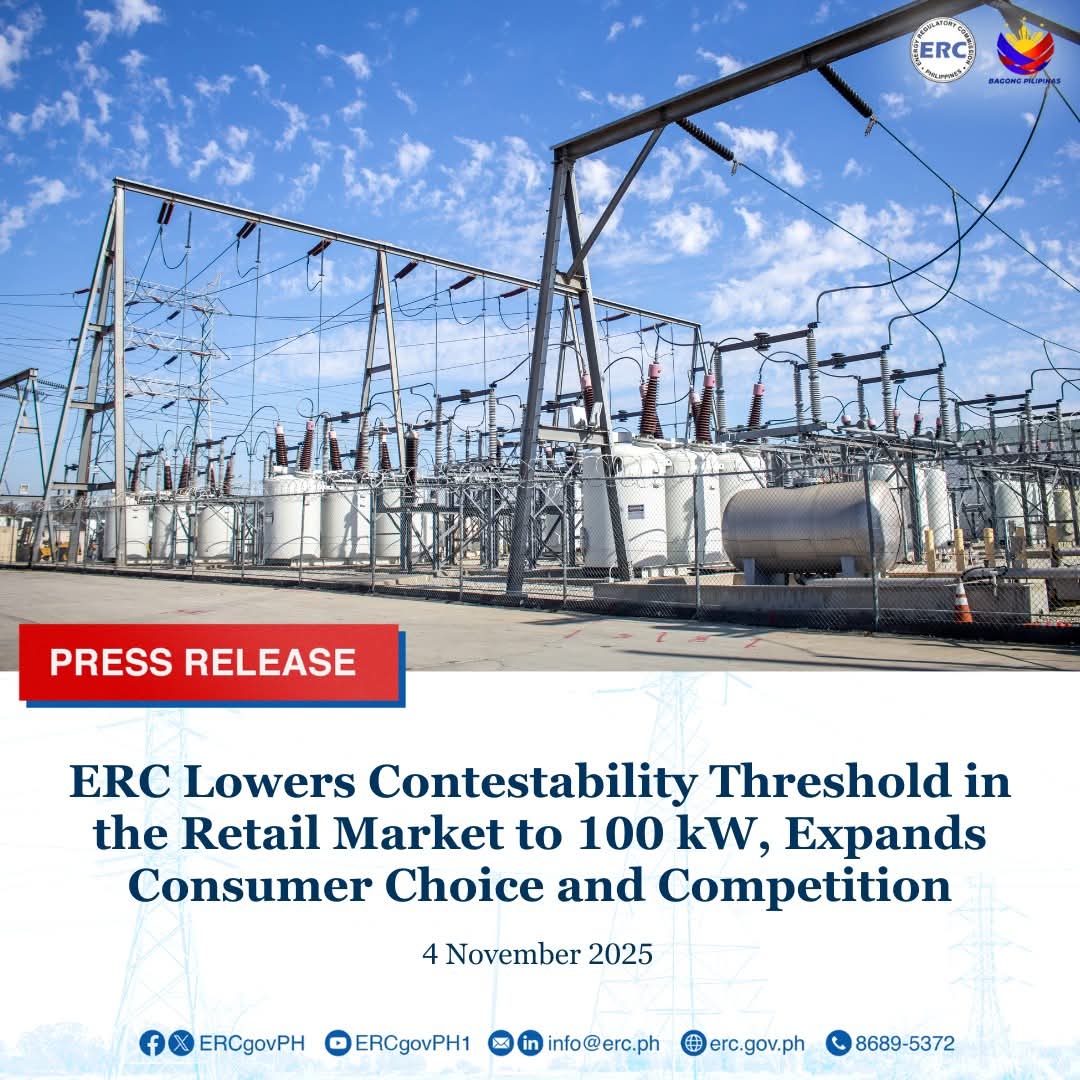
In a transformative move for the Philippine energy sector, the Energy Regulatory Commission (ERC) has officially lowered the contestability threshold for the Retail Competition and Open Access (RCOA) framework to 100 kilowatts (kW). This strategic shift from the previous 500 kW benchmark marks the most significant expansion of the retail electricity market in years, poised to democratize power sourcing for thousands of medium-sized businesses and institutions. By granting these consumers the freedom to choose their electricity supplier, the ERC is executing a core mandate of the Electric Power Industry Reform Act (EPIRA), aiming to foster a more dynamic, competitive, and consumer-centric power market .
From an engineering and infrastructure perspective, the eight-month transition period is not arbitrary but a critical component for ensuring grid stability and operational readiness. The success of integrating this new wave of contestable customers hinges on the widespread deployment of Advanced Metering Infrastructure (AMI), or “smart meters” . These devices are not simple consumption trackers; they are sophisticated data hubs that enable real-time monitoring, precise billing for variable pricing schemes, and enhanced demand-side management. The ERC has concurrently amended the rules governing AMI rollout, recognizing that without this technological backbone, the market would lack the transparency and efficiency required for smaller consumers to participate meaningfully . This period allows Distribution Utilities (DUs) crucial time to procure and install these compliant metering facilities, addressing a key concern raised by stakeholders during nationwide public consultations .
The economic and competitive implications of this policy are profound. The immediate benefit for the estimated 12,154 end-users who now meet the 100-kW eligibility threshold is the power of choice . No longer captive to a single default supplier, businesses can now negotiate with Retail Electricity Suppliers (REs) for better prices, improved service level agreements, and supply options that suit their operational patterns. This competition is expected to drive down generation costs and spur innovation in customer service and energy products. Furthermore, aligning the RCOA threshold with the existing 100-kW level for the Green Energy Option Program (GEOP) creates regulatory coherence, simplifying the path for businesses that wish to power their operations with renewable energy and support the country’s sustainability goals .
Despite the clear benefits, the transition is not without its challenges, a reality the ERC has acknowledged through its phased approach. Stakeholders have rightly flagged concerns regarding the potential for stranded capacities from existing Power Supply Agreements (PSAs) held by distribution utilities . As larger consumers migrate to the competitive market, the fixed costs of these long-term contracts may be concentrated on the remaining captive customers, potentially leading to higher rates for them. The ERC, in coordination with the Department of Energy (DOE) and the Independent Electricity Market Operator of the Philippines (IEMOP), must meticulously manage this risk to ensure a just energy transition that does not unfairly burden residential and small commercial users .
In conclusion, the ERC’s decision to lower the contestability threshold to 100 kW is a landmark step toward unlocking the full potential of a competitive Philippine electricity market. This policy, grounded in a pragmatic understanding of both market economics and engineering necessities, represents a fundamental shift from a monopoly-based model to a consumer-empowered ecosystem. While the path forward requires careful navigation of infrastructural and market risks, the potential rewards—lower costs, enhanced service quality, and accelerated renewable energy adoption—promise to deliver enduring benefits to the Filipino economy and its consumers .
